


Sketchy Sticks With You for Every Year of Medical School


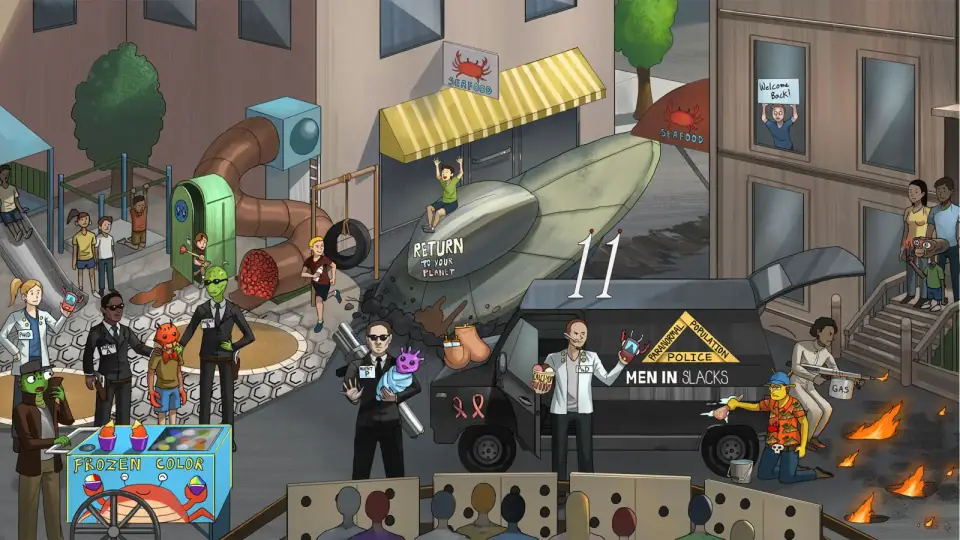

Sketchy supports learning across all four years of medical school, from preclinical content encoding through board preparation and clinical shelf exams. The visual memory approach produces durable retention that holds up through the full arc of medical training.
Sketchy is a visual learning study resource that has helped hundreds of thousands of students. Using memory palaces and visual mnemonics, along with compelling storytelling, Sketchy is making learning unforgettable. Sketchy not only has made material stick better but also sticks with students for every step of their medical journey.
Read from students today on how Sketchy has stuck with them over the years and learn more about the Sketchy Method here.
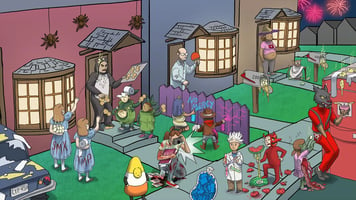
Jordyn McCray, M3: Sketchy has stuck with me A LOT more than I realized. Just today, I was watching a video and a question came up regarding the correct treatment option for Pneumocystis Jirovecii. The first thought that crossed my mind was “I have no idea,” but then the next thought was an image of “Trick or treat, smell my sulfa drug.” All it took was a quick flash of that sketch in my brain for me to guess the correct answer. As you’re watching the videos, you wonder how it’s all going to stick, and I honestly have no idea, but what I am sure of is that it works!...I know that Sketchy has stuck with me, because now anytime a drug or bug pops up, I automatically associate it with its particular sketch. Thank you Sketchy!!!

Ben Lack, M2: Sketchy has stuck with me by permanently associating objects with important medical concepts. As a medical student we are inundated with information and it can become seemingly impossible to differentiate between two similar concepts. Associating abstract concepts (like a drug mechanism of action) with a concrete real world example (like a concert hall full of trombone players) makes recall infinitely easier!
Andrew Oh, M3: “... in the hospital! I knew Sketchy images would live on in my head even after I finished Step 1, but it truly has dominated any other learning resource during the clinical years too. Sketchy has amazing clerkship-focused lessons, and since I was already familiar with the way Sketchy wants us to learn material, the transition was very easy going into rotations. Additionally, many, many of the videos that I was watching for Step 1 still made their way into my learning for Step 2 (especially pharmacology).

Emilie Mathura, M4: I see things from sketches everywhere I go. I will often text my medical school group chat and say "name that sketch" and most of them know the exact sketch I was thinking of. In a saloon once, I thought of the Nocardia sketch. Every time I see a chandelier, I think of the uterus chandelier in the Neisseria Gonorrhea sketch. Once you have seen the videos, You won’t be able to escape the world of Sketchy which turns everyday life into spaced repetition.
Tiara Fulmore, M2: After hearing just the first chord of Baby by Justin Bieber I can confidently recite all of the lyrics even after years of not playing the song. Sketchy videos have become the "catchy songs" of my studying. Months after I've completed and moved past a topic, around the time when most students have completely forgotten what they’ve learned, I find the information coming back to me just by hearing certain trigger words. For example, nearly a year after taking the MCAT and graduating, my mind still pictures a teacup ride and "acetyl-cola" anytime I hear the TCA cycle. This type of recall is why I choose to stick with Sketchy.
Christoph Isbjorn, M3: While on my orthopedic surgery rotation, I was asked about diabetic medications due a patient being on a certain gliptin drug. I was able to explain the MOA through my memory of the sketchy on diabetic medications. Needless to say, I helped my attending out and he was impressed!
Nic Hutt, M3: Whenever I am asked a micro, pharm, or path question my thoughts immediately go to the corresponding sketch and start hunting for relevant symbols! I am currently pre-learning for my surgery rotation and am working my way through the trauma, burns and critical care section...My favorite sketches have to be the shock series in Sketchy Internal Medicine…I think the true strength of Sketchy Medical comes from getting to know the broad universe and the symbols that recur across videos.
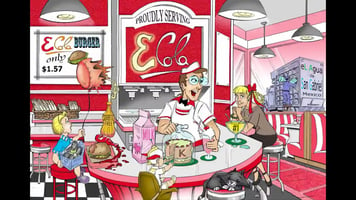
Preston Carey, M2: The Sketchy Micro video on Staph aureus as well as many of the other gram positives/negatives all live rent free in my head. We started the year off with UTIs and kidney stones so being able to recall the symbols in the Proteus video as well as the E. coli and Pseudomonas video that I had watched months ago helped me to stay on top of content in the early weeks. I’m sure that this imagery will be immensely helpful in preparation for Step 1 this spring!
Madison Nguyen, pre-med: Sketchy made it so easy for me to tie in all the little details I learned from content review, and into one big cohesive picture. This is important for me because the MCAT doesn’t test on how much information I can shove into my brain, but how I use that information. For example, I might know all the definitions between the different kinds of intermolecular forces, but the MCAT might test on which intermolecular forces is the strongest type. This is where Sketchy comes into play. For instance, Sketchy helped me picture that hydrogen bonds are the strongest type of intermolecular forces by helping me visualize an individual in the "H-otel" with strong muscles. This is why I tell anybody to stick with Sketchy, especially a visual-learner like myself.
