


How to Study for Your NP Program: Why Sketchy Works



Sketchy NP is built for the specific demands of NP school: dense content, limited time, and the need to apply knowledge clinically rather than just recall it. Visual learning, spaced repetition, and case-based practice work together to help NP students retain more in less time.
NP programs are demanding in a way that is different from most other graduate programs. You are not just covering a large volume of content. You are doing it while managing clinical rotations, often while still working as an RN, and with board certification on the horizon as the ultimate measure of whether it all stuck. Standard study approaches, rereading notes, highlighting slides, passive review, rarely hold up against that combination of pressure and time constraint. You need something that works faster and lasts longer.
What is Studying in NP School Like?
The transition from following orders to making clinical decisions is one of the most significant mental shifts you’ll face. Instead of memorizing protocols, as an NP student, you’re expected to build differential diagnoses, interpret labs, and prescribe treatments, all while justifying your clinical reasoning. NP Programs have a lot of memorization and will focus on the “why” and how to adapt to each patient.
You’re not only expected to remember everything, you’re supposed to apply that knowledge in a year or so when you hit your clinical rotations. It can be overwhelming for any NP student to grasp balancing coursework, clinicals, and outside life expectations.
All of this to say this is why Sketchy NP exists. The program is geared to help you as an NP student learn the material efficiently, saving you study time and quicker recall during exams and on the rotations.
Sketchy uses elaborative encoding and visual learning from an ancient Greek technique called the “Method of Loci” to create a memory technique to recall information more easily and quickly. This is the same technique utilized by memory athletes who pull off amazing feats like memorizing entire decks of cards and strings of random numbers. Rather than having to research on your own how to utilize this method, Sketchy works with NPs, clinicians, and artists to provide visual mnemonic devices set in richly crafted memory palaces. This way, you can close your eyes and visualize the connections between symbols and concepts to quickly come up with the correct answer on exams and rotations. Take a look below for the top 5 reasons why Sketchy is the perfect memory resource for NP programs.
Why Does Visual Learning Work for NP Programs?
When you’re overwhelmed by the dense textbooks and endless lecture notes, visual learning can feel like a lifeline. Each Sketchy lesson turns a complex medical concept into a story-based illustration. Every key fact is tied to a memorable symbol. You watch the story unfold visually, reinforcing what you’re learning as it happens.
Take the topic of acetylcholinesterase inhibitors. In Sketchy, this lesson unfolds as a community block party, where every character and object is a symbol tied to a key medical concept.
- A billboard for Acetyl-Cola represents acetylcholine.
- An Acetyl-Cola bottle return dumpster shows that acetylcholinesterase breaks it down.
- When a skater knocks that dumpster over? That skater is your acetylcholinesterase inhibitor, which inhibits the enzyme and causes bottles (aka acetylcholine) to spill and build up at the synapse.
- The skater's “Stigma” skateboard reminds you of drugs ending in -stigmine, like neostigmine and pyridostigmine, which are both examples of acetylcholinesterase inhibitors.
Instead of memorizing endless drug names and mechanisms, you're watching a story, full of visual cues designed to anchor complex concepts in your memory.
How Does Sketchy Help NP Students Retain Information?
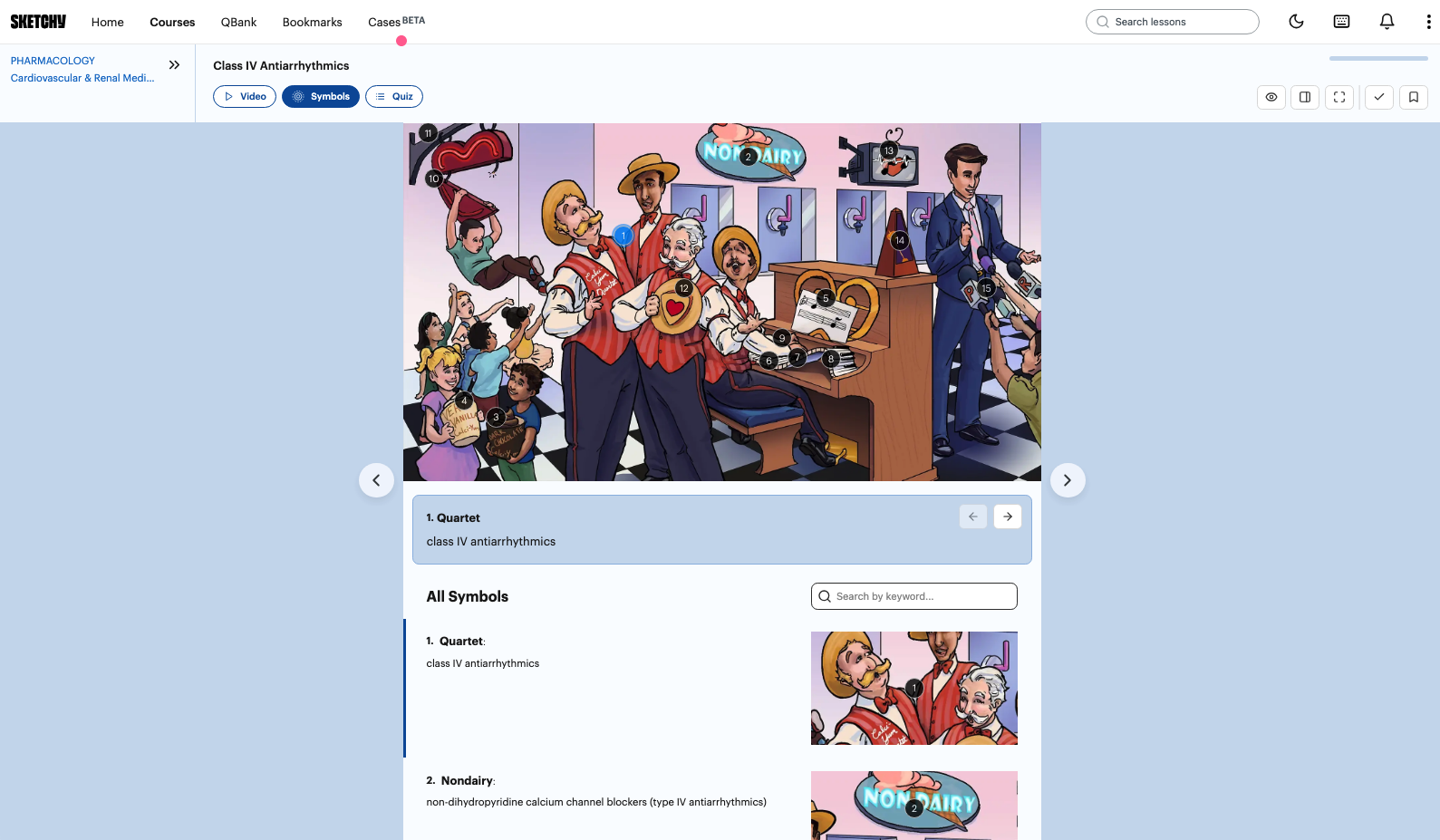
NP programs move fast, so it’s crucial to reinforce what you’ve already learned while taking in new material. After watching a Sketchy video, you can review the lesson using the Sketchy Symbol Explorer. This spaced repetition tool helps lock in key symbols and concepts for long-term retention. The interactive review cards let you click through every symbol from the video at your own pace, with a toggle feature to test your recall as you go.
How Do Sketchy NP Quiz Questions Prepare You for Boards?
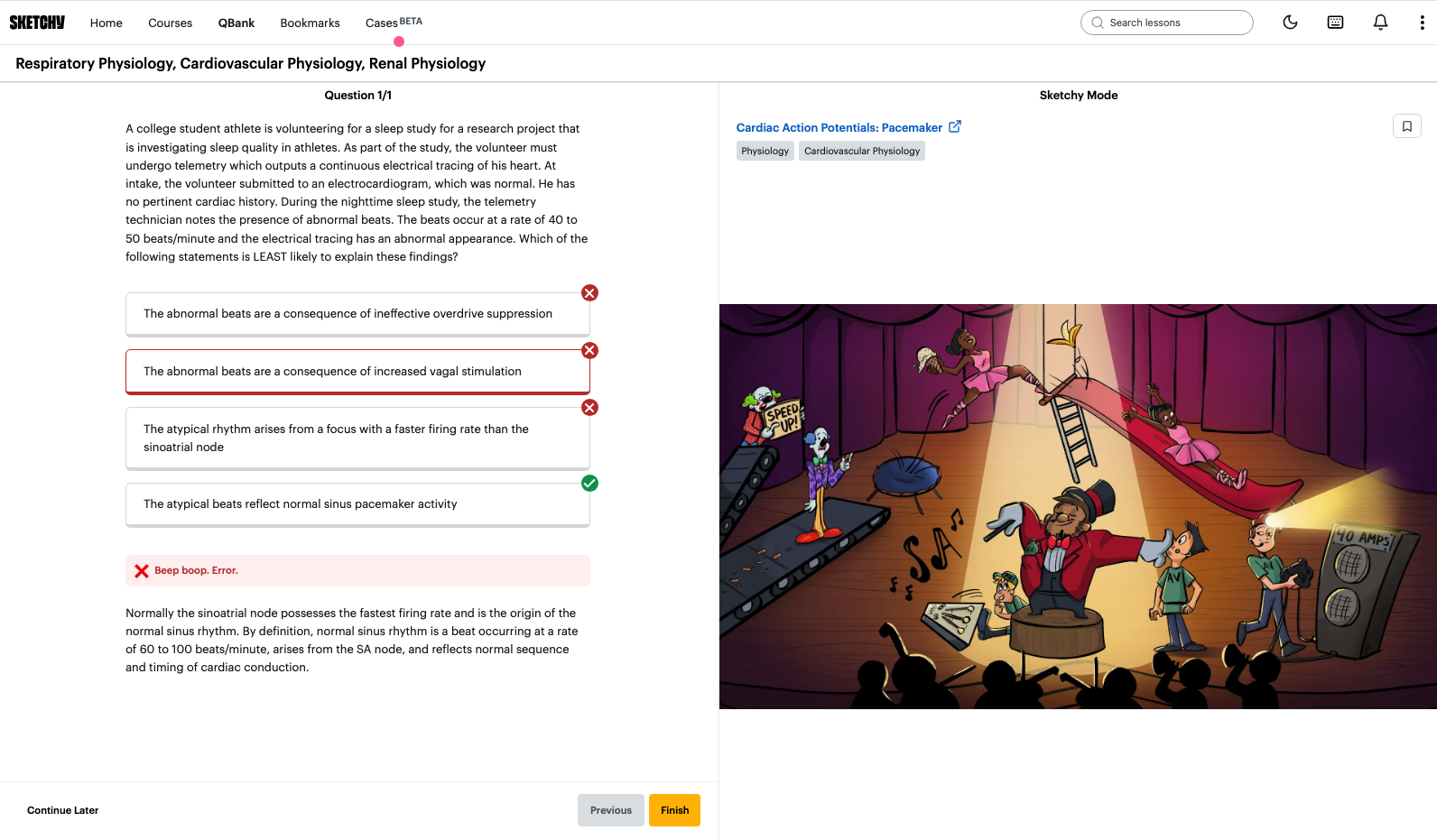
NP programs are challenging, which is why every Sketchy NP lesson includes quiz questions to reinforce what you’ve learned. After watching a video, you can test yourself right away—or build a custom exam using the QBank, pulling questions from multiple courses. Choose Tutor Mode to get instant feedback with direct links to lessons, or Test Mode for a real exam feel. You can even bookmark questions to review later.
How Does Sketchy Fit Into a Busy NP Student Schedule?
As an NP student, flexibility is key and long study sessions aren’t always realistic. With Sketchy, you can study in short bursts that fit your schedule. Watch a video in 10 minutes during your commute or squeeze in quiz questions between TV episodes. Need a quick refresher? Use the search feature to instantly find the topic you’re looking for.
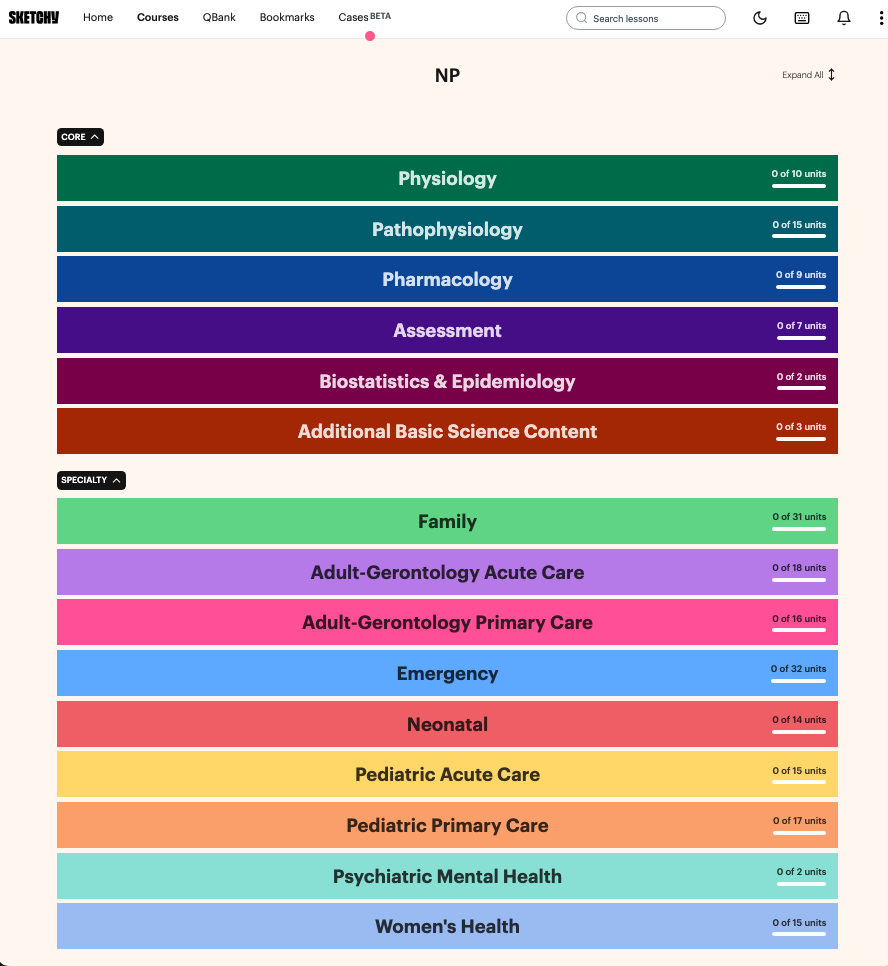
The most useful tip for all NP students is to make a schedule. Plan out when you’re in class, when you have other obligations like work or family commitments, and build in time to study and write down what you will study. Look at your class schedule and syllabus to decide what you need to cover. Sketchy is organized into courses like pharmacology, anatomy, and physiology. If your NP program is structured like that perfectly, you can tackle each course as you progress through your program. If not, as mentioned above, use the search feature to pair Sketchy lessons with your coursework.
Once you’ve set your schedule, stick with it. Planning helps you stay organized and cuts down on wasted time, so you can focus more on studying, not figuring out what to study.
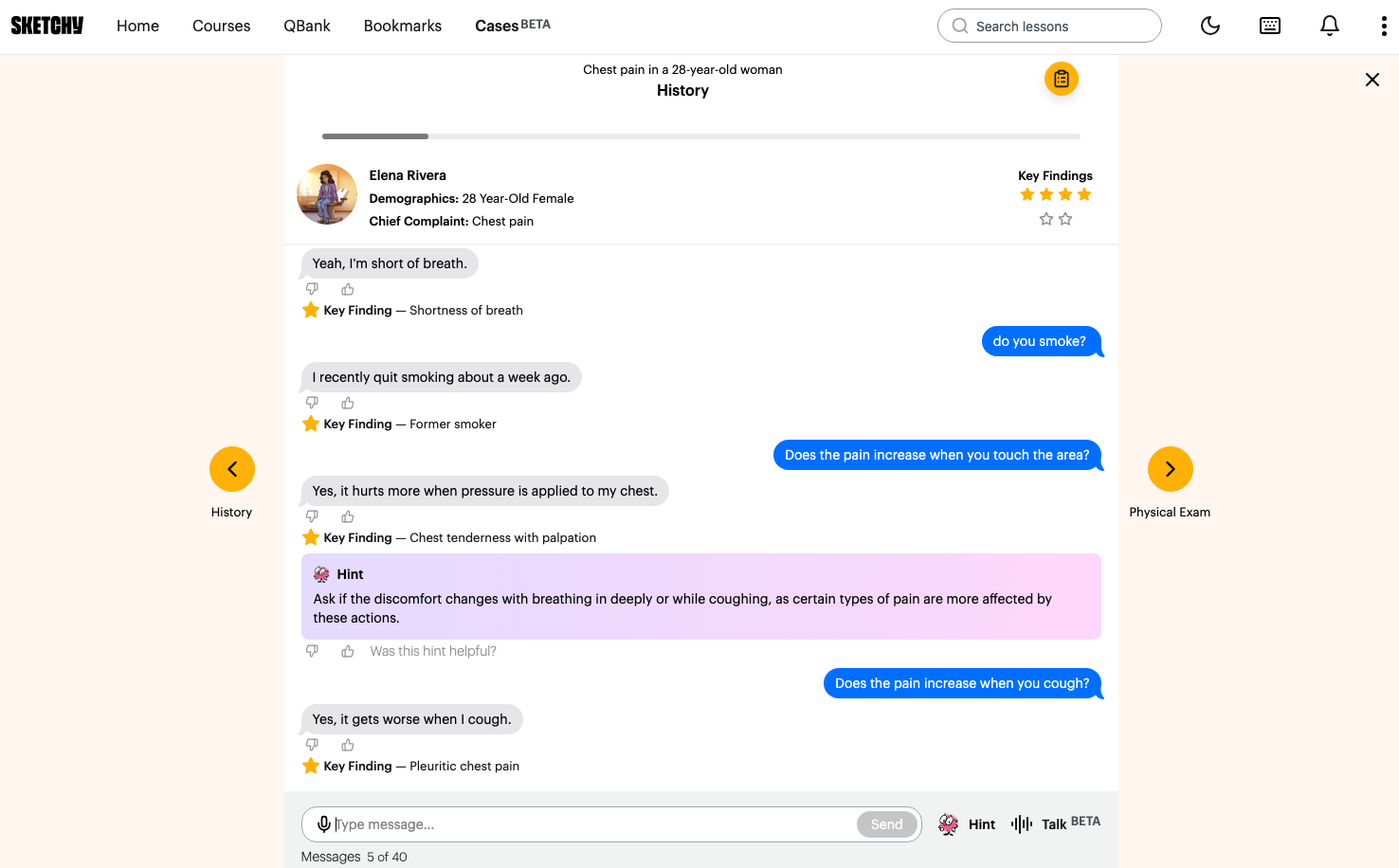
Sketchy just launched a brand new learning tool called Sketchy cases. Practice your clinical reasoning skills, building differential diagnoses, and interpreting labs all within this AI-assisted learning platform. With 70+ cases and new ones added regularly, see a patient with chest pain or shortness of breath. You’ll take a history and physical exam, explain your differential diagnosis, go through management steps, and see the patient's outcome. Cases will help you apply the knowledge that you learn by watching Sketchy lessons!
Why Study With Sketchy for Your NP Program
And there you have it, why Sketchy is the go-to study tool for NP programs. Sketchy’s helped thousands of NP students succeed and has refined our system to make acing your exams, clinicals, and boards easier than ever. Check out more from Sketchy NP!
