


How to Choose the Right Medical School for You




Choosing the right medical school means aligning the program's strengths with your specific goals, learning style, and financial situation. Curriculum structure, cost, location, and culture are the factors that will most directly shape your day-to-day experience and your career trajectory.
Introduction: The Importance of Choosing the Right Medical School
If you’ve already completed the MCAT or are gearing up for it, you’re likely in the process of narrowing down where to apply for medical school. Choosing the right school is a critical decision that can shape your entire career in medicine. The curriculum, faculty, clinical exposure, research opportunities, and residency match rates will play a significant role in your success. But beyond academics, the location, cost, and school culture will also affect your overall experience. It’s all about finding the best fit that aligns with your career goals and personal preferences!
Key Factors to Consider When Choosing a School:
- Career Aspirations: Whether you're drawn to primary care, a specific specialty, research, or even healthcare policy, make sure the school supports your interests.
- Finances: Consider tuition, scholarships, living costs, and financial aid packages.
- Location: Think about where you want to live for the next 4 years—climate, cost of living, proximity to family, and even residency match rates are important.
- School Culture: Look for a school that aligns with your values, offers robust support systems, and fosters a healthy work-life balance.
If you're waiting to apply or preparing for the next MCAT cycle, now is the time to think about how your scores and experiences will fit with your top schools. Review each school’s GPA and MCAT requirements to ensure you’re competitive, and remember that your application is more than just the numbers. It’s about finding a school that matches your personal and academic goals.
How Many Medical Schools Should You Apply To?
The application process can be overwhelming, but applying to 15-30 schools, with a mix of both MD and DO options, is typically recommended. Applying to more than 30 can increase costs and time spent, without drastically improving your chances. Instead, focus your energy on schools that align with your qualifications and values.
Managing Application Costs:
- Application fees for AMCAS or AACOMAS and secondary application fees can add up. Prioritize schools where your profile matches the school’s average stats.
- If you’re on a budget, use fee assistance programs to reduce costs.
By applying strategically, you'll increase your chances of success. You’ll want to apply to a mix of reach schools (where your stats are below average), target schools (where your stats closely align with the average), and safety schools (where your stats exceed the average).
Defining Your Medical School Goals
Whether you’ve taken the MCAT and are now refining your strategy for applying, or are preparing to dive into your first round of prep, it’s crucial to reflect on your long-term career goals. What excites you about medicine? Are you passionate about patient care, research, or a specific field like surgery, pediatrics, or psychiatry? Even if you’re not fully decided, think about what interests you and how it might influence your school selection.
Finding Your Ideal Environment:
- If you love hands-on learning, look for schools with early clinical exposure.
- If you want to explore research opportunities, focus on schools that offer strong research mentorship.
- Your learning style matters too: Do you thrive in collaborative environments, or do you prefer a more independent approach? Finding a school with the right teaching style is just as important as finding one with the right curriculum.
Look for schools with strong mentorship opportunities and a variety of clinical rotations that will help you explore different fields. And don't forget about extracurriculars, leadership roles, and community service—these experiences not only strengthen your application, but also help you grow as a well-rounded candidate.
Finding Schools That Align with Your Goals
Now that you’ve taken the MCAT (or are preparing to), it’s time to research schools that align with your specific goals and preferences. Start by narrowing down your list based on your priorities, such as curriculum type, location, and what clinical experiences or specialties you want to explore.
Key Steps for Research:
- Review the school’s mission, values, and offerings to see if they match your goals.
- Consider rankings and reviews for clinical experiences, research opportunities, and school culture—but don’t make these your only decision-making factors.
- Reach out to current students and alumni to get a real sense of what it’s like to be at that school.
- Look into their residency match rates, affiliations with hospitals, and clinical exposure to assess the strength of their training programs.
And don’t forget about the basics—accreditation, board pass rates, and whether the school’s mission aligns with your career aspirations.
Evaluating the Medical School's Culture & Support System
School culture plays a huge role in your overall medical school experience. When you visit campuses or attend virtual events, pay attention to the student environment. Is there a collaborative atmosphere, or does it feel more competitive? How supportive is the faculty? Are there wellness programs, mentorship opportunities, and extracurricular activities?
Look for These Key Support Systems:
- Wellness Programs: Mental health support and stress management are essential for success in med school.
- Academic Support: Look for schools with tutoring, mentorship, and resources to help students thrive.
- Student Organizations: These can give you a sense of the school’s culture, diversity, and leadership opportunities.
If you’re unable to visit in person, reach out to admissions and current students or alumni through social media for more personalized insights.
Curriculum & Learning Format: What Works for You?
As you prepare for the MCAT and navigate the application process, think about what type of learning environment will suit you best. Schools typically offer traditional lecture-based curricula or system-based curricula, which organize material by body systems, while some other schools offer a hybrid approach. Understanding how you learn best will help you choose a program that complements your strengths.
Learning Formats to Consider:
- Traditional: Primarily lecture-based, with less early clinical integration.
- System-Based: Integrates subjects with clinical experiences, giving you more real-world relevance.
- Hybrid/Online: Flexible options that may offer a mix of in-person and virtual learning.
If you’re still prepping for your MCAT, make sure your study strategies align with your preferred learning style (visual, auditory, kinesthetic, etc.) to maximize efficiency and retention.
What If Your MCAT Score Doesn't Align with Your Dream Medical School?
If you’ve already taken the MCAT and your score doesn’t meet your dream school’s expectations, don’t panic. A “good” MCAT score typically ranges between 510-528, but schools differ in their score requirements. If your score is below average, don’t be discouraged—there are still ways to strengthen your application.
Next Steps to Consider:
- Retake the MCAT if you believe your score can improve with more preparation.
- Focus on Other Areas of Your Application: Strengthen your clinical experience, research, leadership, and personal statement. Schools with a holistic admissions process may place more weight on these areas than on your MCAT score alone.
- Target Schools with Flexible Admissions: Some schools are more flexible about MCAT scores and may place more emphasis on your experiences and personal growth.
The Application Process: Stay Organized
Tracking Deadlines Efficiently
To stay organized, create a master timeline with primary and secondary deadlines for each school. Use a spreadsheet to track deadlines and prioritize tasks. Set reminders for each deadline in advance by using tools like Todoist or Google Calendar. Track secondary applications separately and monitor rolling admissions.
MD vs. DO Application Timelines
- MD (AMCAS): Primary applications open in May and close in November. Secondary applications begin in July, with interview invitations occurring from fall to winter. Decisions are made between October and April.
- DO (AACOMAS): Primary applications open in May and close in March. Secondary applications are sent in June/July with rolling interviews from fall to March. Decisions are made from October through April.
Staying on Top of Requirements
Create a checklist to track your GPA, MCAT, and prerequisites. Set academic goals and use tools like Google Calendar or Trello to track key milestones. Regularly review your grades and adjust study plans accordingly. Meet with advisors and utilize prep resources to stay on track.
Importance of Checking School Websites
Each school may have unique prerequisites, deadlines, and application requirements. Websites also provide details on interview formats, tuition, financial aid, and scholarships, helping you tailor your applications to meet each school’s specific expectations.
Creating a Checklist
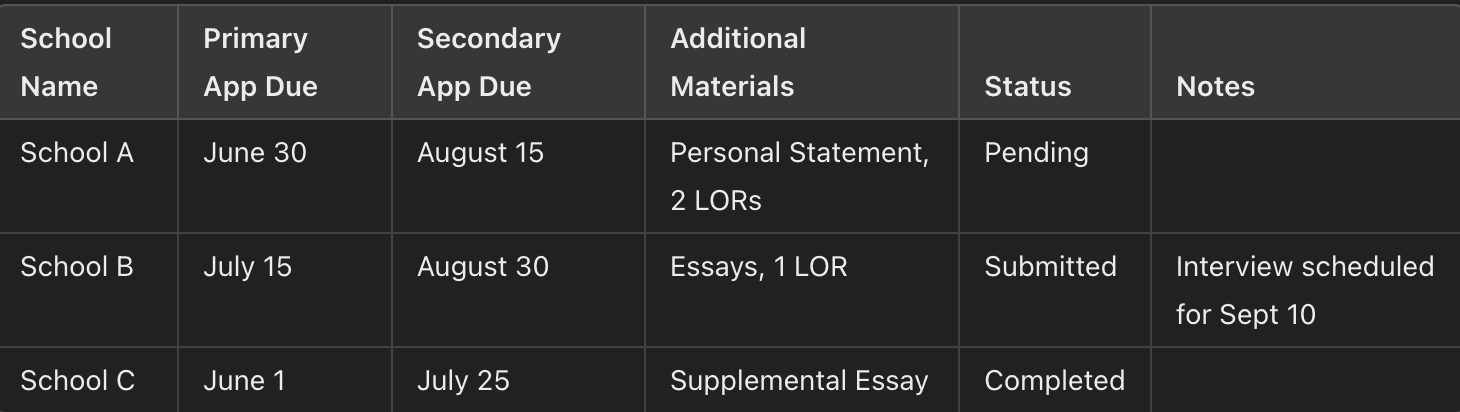
Use a spreadsheet or digital tool to list application tasks for each school, including deadlines, required materials (e.g., essays, recommendation letters), and statuses. Set internal deadlines to ensure tasks are completed on time. Use reminders and track progress to stay on schedule, including follow-up tasks like thank-you notes after interviews.
Setting Realistic Expectations
Why Be Open to Multiple Options?
Being open to multiple medical schools increases your chances of acceptance, as schools have different requirements and priorities. It also helps you find the best fit in terms of curriculum, specialization, and campus culture. Being open to both MD and DO programs increases your chances of acceptance and gives you the flexibility to reach your goal of becoming a physician. Both paths lead to the same career, with DOs receiving additional training in osteopathic manipulative medicine (OMM). Residency opportunities for DOs have also expanded with the unified ACGME system, and both degrees allow entry into competitive specialties. Instead of focusing only on the title, consider factors like curriculum, support, and personal fit. Geographic flexibility and financial considerations, like tuition and aid, are important factors as well. This approach builds resilience and ensures you find a program that aligns with your personal and professional goals.
Balancing Dream Schools with Realistic Choices
Create a mix of reach, match, and safety schools by comparing your qualifications with each school's requirements. Choose schools that align with your learning style, goals, and financial situation—not just prestige. Consider factors such as location, aid, and opportunities for growth. Aim high, but maximize your chances of success by keeping your options diverse.
Preparing for Rejections and Moving Forward
Resilience and a growth mindset are key when facing rejections. Treat rejection as a learning experience to identify areas for improvement. Focus on gaining experience, improving grades, or developing new skills for the next cycle. Lean on your support system and consider backup plans like post-bacc programs. Stay grounded by prioritizing mental health and maintaining balance.
Why Self-Reflection Matters
Self-reflection helps you understand your strengths, weaknesses, and motivations, which can lead to a more authentic application. It clarifies your commitment to medicine, ensuring that your passion shines through in personal statements and interviews. Reflecting also builds resilience, helping you learn from setbacks and stay focused on your long-term goals. Most importantly, it ensures that you're preparing for a career in medicine—not just checking boxes.
Conclusion: Making the Best Choice for Your Future
Choosing the right medical school is a major decision that will shape your future career. Before making your final choice, take the time to gather information, reflect on your priorities, and seek guidance from trusted sources.
Next Steps Before Making Your Decision:
- Visit Schools (in-person or virtually) to get a feel for the environment.
- Consult Your Support System to gain insights from mentors, family, and friends.
- Evaluate the Whole Package: Review the financial aid options, school culture, and long-term opportunities that each school offers.
Resources to Help You Navigate Your Decision
- Admissions Websites: Provide essential details on curriculum, requirements, and deadlines.
- Medical School Advisors: Offer personalized advice on evaluating schools.
- Current Students/Alumni: Give firsthand perspectives on the school’s environment.
- Online Communities: Platforms like Reddit and SDN offer insights from past applicants.
- Campus Visits/Virtual Tours: Experience the school’s culture and facilities.
- Med School Rankings: Provide a broad overview of research and residency placements.
- Financial Aid Offices: Help with tuition, scholarships, and living costs.
- Mentors and Faculty: Offer guidance from their own experiences in the field.
- Online Resources: AAMC tools for comparing schools and reviewing admissions data.
When it’s time to choose a medical school, focus on the one that best matches your career goals, learning style, and personal preferences. Reflect on what’s most important to you—whether that’s the curriculum, culture, or clinical opportunities—and don’t be afraid to trust your instincts!
